With the Arabi Method, your child moves through six ordered levels, beginning with the shape and sound of the hijaiyah letters and reaching the mushaf read with proper tajweed. In every session an ustadz or ustadzah hears the reading in person, one student at a time, for ages 5 up to the elderly. Families across Bekasi Timur, Jatiasih, and Pondok Gede choose how it runs, whether at home or over the screen.
What is the Quran recitation course at Arabi in Bekasi?
The Arabi Method for Quran Recitation in Bekasi arranges learning step by step, from basic introduction to fluent reading, so a child in Bekasi advances with a strong and lasting foundation. The Arabi recitation course walks you from recognizing the hijaiyah letters up to fluent tajweed, across six ordered levels of the Arabi Method.
Key points
The six levels stack on one another, from the hijaiyah letters up to tilawah.
The teacher hears your reading and corrects it right there through talaqqi.
You begin from the point that fits you, whether a child, an adult beginner, or an elder.
The munaqasyah exam decides when you rise a level, so the base is always tested first.
Quick facts
Levels
6 ordered stages
Format
Private, one student at a time
How you learn
At home or online
Age
5 years up to the elderly
What It Is
What is Reciting the Quran in Bekasi?
Learning Quran Recitation in Bekasi with Arabi means your child is guided to read the Quran with correct tajwid and organised steps, suited to the rhythm of families in a city as dense as Bekasi. Reciting the Quran means reading it correctly, opening with the hijaiyah letters, adding the harakat, then reading the mushaf with proper tajweed.
Knowing the makhraj, the point where each letter leaves the mouth across five regions.
Adding fathah, kasrah, and dhammah, then sukun, tasydid, and tanwin until the reading runs smoothly.
Reading the mushaf with tartil, a calm and orderly pace that keeps to the rules.
Bringing the rules of tajweed to life, from nun sukun, mim sukun, and mad to qalqalah, through real verses.
Learning Map
Six Levels of Recitation, from Arabi 1 to Tilawah
Six tiered levels, each one a stepping stone to the next. The student is placed at the level that fits, then advances once they pass munaqasyah.
Arabi 1
Hijaiyah Letters
You canThe student recognizes the shape and sound of the 28 hijaiyah letters with the correct makhraj.
The shape and name of the 28 letters
The sound of each letter from its makhraj
Practice distinguishing letters that are close
Arabi 2
Joined Letters
You canThe student reads letters joined within a word using the fathah harakat.
Letters at the start, middle, and end of a word
Joining letters into short words
Basic reading fluency
Arabi 3
Kasrah and Dhammah
You canThe student reads the kasrah and dhammah harakat along with their long sounds through wau and ya.
Kasrah and dhammah
Mad asli with wau and ya
A wider range of words
Arabi 4
Tanwin and Sukun
You canThe student reads tanwin, sukun, mad far'i, and qalqalah within verse fragments.
Tanwin and sukun
Tasydid
Mad far'i and qalqalah
Arabi 5
Waqaf and the Mushaf
You canThe student reads directly from the mushaf with a calm tartil.
Waqaf marks
Al-syamsiyah and al-qamariyah
Tartil from the mushaf
Arabi 6
Tahsin and Tilawah
You canThe student refines the rules of tajweed and gets to know the beauty of tilawah.
The rules of nun sukun and mim sukun
Perfecting tajweed
Introduction to tilawah
Each level uses only the harakat and rules already taught, so the student reads correctly from the very first page.
Child Readiness
Signs of Readiness to Begin Reciting
Every child in Bekasi has a different starting point, so we adjust readiness for learning Quran Recitation to your child's age and ability, from those just getting to know the hijaiyah letters to those ready to step further. Reciting can begin at any age. The signs below give only a rough picture for gauging readiness, and the teacher still maps the level through an initial assessment in the opening session.
A Child Ready to Begin
Can sit and listen for around 20 minutes
Enjoys copying the sound of the letters being voiced
Knows a few letter shapes even before they are all memorized
Adults and the Elderly
Wants to improve their reading or begin from scratch
Can set aside around 60 minutes steadily each week
Willing to repeat the reading at home between sessions
What Arabi Provides
A warm reading assessment in the opening session
Level placement that matches ability
Material sheets and a mushaf suited to the stage
Guidance
Guidance in Reading the Quran
وَرَتِّلِ الْقُرْآنَ تَرْتِيلًا
Wa rattilil-qur'ana tartila
And recite the Quran with tartil.
QS Al-Muzzammil: 4
Reading with tartil, that is slowly and orderly according to the rules, is the foundation of the manners of learning recitation at Arabi.
Real Arabi Teachers
Ustadz Who Teach Quran Recitation in Bekasi
A glimpse of the real Arabi teachers who guide Quran Recitation in Bekasi, chosen from leading campuses and trained in the Arabi method.
DUIN
Ustadzah Dita P.
UIN SULTAN SYARIF KASIM RIAUILMU Al-Quran DAN TAFSIR
Membimbing bacaan santri agar makhraj dan sifat hurufnya tepat, sehingga tiap huruf keluar dengan benar dan jelas. Makna ayat ikut dibuka lewat tafsir yang ringan dicerna. Pengalaman yang dibentuk di UIN membuatnya sabar menghadapi tiap santri.
Mengaji Al-Quran
Bahasa Arab
Tahfidz
Ulumul Quran
Tafsir
LUIN
Ustadzah Lail N.
Universitas Islam Negeri Sunan Ampel
Memperbaiki bacaan santri satu per satu, sehingga setiap pertemuan terasa makin lancar dan percaya diri. Bahasa Arabnya membantu santri memahami makna yang dipelajari. Bekal akademiknya dari UIN menjadikan penjelasannya tertata dan mudah diikuti.
Mengaji Al-Quran
Bahasa Arab
Studi Islam
WAl-Azhar Kairo
Ustadz Wahid F.
Universitas Al-Azhar, KairoTafsir dan Ilmu Al-Quran
Membimbing hafalan tahap demi tahap, menjaga bacaan tetap bertajwid sambil menambah setoran sedikit demi sedikit agar melekat. Pendidikannya di Al-Azhar Kairo memperkaya cara ia menjelaskan tiap pelajaran.
Tahfidz
Mengaji Al-Quran
Tahsin Tajwid
Bahasa Arab
Tafsir
SUIN
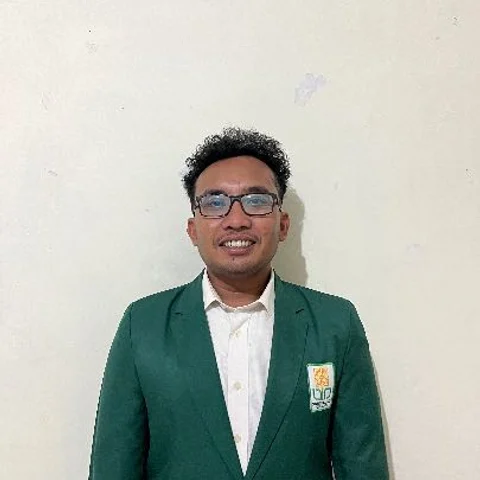
Ustadz Sandi R.
UIN Sunan KalijagaIlmu Hadits
Membimbing santri dari hafalan surat pendek sampai juz yang lebih panjang, dengan target yang masuk akal dan terukur. Adab dan pemahaman keislaman ditanam bersama pelajaran. Bekal akademiknya dari UIN menjadikan penjelasannya tertata dan mudah diikuti.
Tahfidz
Bahasa Arab
Mengaji Al-Quran
Tahsin Tajwid
Studi Islam
These are a few of the teachers; thousands more serve families across Indonesia.
Material Preview
Real Quran Recitation Materials for Students in Bekasi
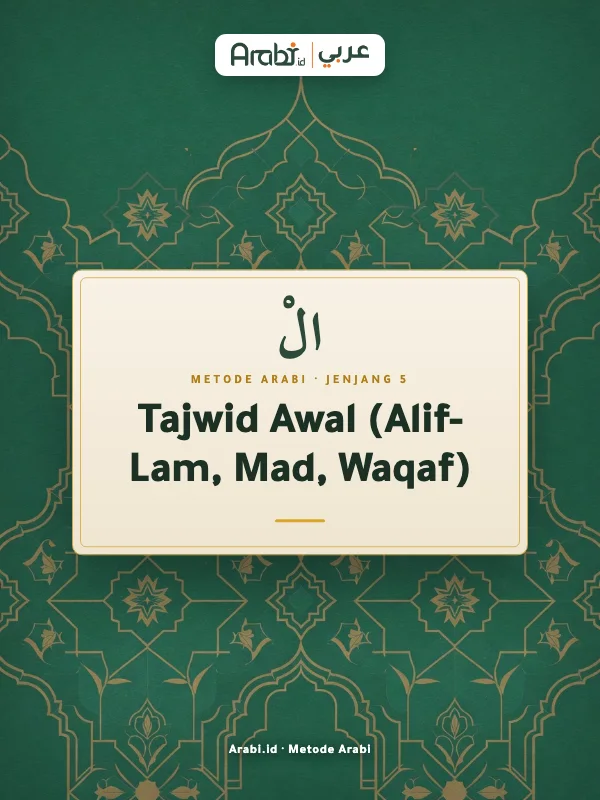
A preview of the official Arabi Method modules used in lessons, showing the depth of Arabi teaching materials.
Tajwid Awal: Alif-Lam, Mad, Waqaf
Real material
Tilawah: Masuk Al-Quran
Real material
Mengenal Huruf Hijaiyah
Real material
Materials are matched to the level and ability of each student.
Tutor
The Ustadz and Ustadzah Who Hear Your Reading in Bekasi
Arabi teachers are skilled in reading the Quran and in Arabic, chosen from a range of campuses and universities, then trained to the standard of the Arabi Method. What they carry is real skill in reading the Quran, a firm grasp of the Arabi Method, and the sincere heart of a teacher who guides with good manners, with care, and with a close eye on the student's reading.
S
Skilled and CapableNational network
Holds the makhraj, tajweed, and correct pronunciation of the letters, so the student's reading is guarded from the base.
Tahsin
Tajweed
Letter makhraj
T
Trained in the Arabi MethodCampus graduates
Knows the flow of the six levels, the way of talqin and musyafahah, and weighs the student's readiness through munaqasyah.
Arabi Method
Munaqasyah
Talaqqi
T
The Heart of a TeacherIn person and online
Patient and courteous, setting the rhythm of learning for a child new to the letters and for an elder who longs to read fluently.
Guiding children
Guiding adults
Manners of learning
Levels
The Right Starting Point at Every Age
A leveled curriculum. Your child moves up only after mastering each stage, so the foundation stays solid.
1
Children from 5 Years
5 - 11 years
Introducing the hijaiyah letters with patience
An enjoyable pace
Correct reading as a foundation from early on
2
Teenagers and Students
12 - 18 years
Tidying up reading that once paused
Fluency for daily worship
Ready for recitation at school
3
Adult Beginners
19 years and up
Starting from scratch with ease
Private one-on-one
A flexible schedule
4
The Elderly
Any advanced age
Pace and duration adjusted
Mushaf text size adjusted
Makhraj corrected gently and patiently
Curriculum
The Lesson Content, Broken Down Step by Step
Module 1
Introducing the Letters and Makhraj
The shape, name, and sound of the 28 hijaiyah letters, along with the five regions they exit from. Letters whose makhraj is close are trained separately so their sounds are told apart accurately.
28 hijaiyah letters
Five makhraj regions
Practice with similar letters such as sin and syin
Module 2
Harakat and Joining Letters
Reading letters with harakat then joining two to three letters in a row into a word. This stage builds fluency before the student moves into the full mushaf.
Fathah, kasrah, dhammah
Sukun, tasydid, tanwin
Joining letters into words
Module 3
Reading the Mushaf with Tartil
Reading directly from the mushaf at a calm pace. Waqaf marks are introduced so the student knows how to stop and begin a reading correctly.
Tartil from the mushaf
Waqaf marks
Al-syamsiyah and al-qamariyah
Module 4
Tajweed with Verse Examples
The rules of nun sukun and tanwin, namely izhar, idgham, iqlab, and ikhfa, then the rules of mim sukun, mad, and qalqalah, are learned step by step through real verses.
The rules of nun sukun and tanwin
The rules of mim sukun
Mad and qalqalah
FAQ
Questions About Learning Quran Recitation at Arabi in Bekasi
My child knows only a few hijaiyah letters, which level do they begin from?
The opening session begins with a warm reading assessment, and the teacher hears which letters your child already knows. From there the right level is set, usually Arabi 1 or Arabi 2. Your child carries on from the right page, repeating where needed and stepping into new material once the basics are solid.
What are talqin, musyafahah, and talaqqi that the Arabi Method uses?
Talqin is when the teacher voices a letter or verse correctly and the student echoes it. Musyafahah is when the student follows how the teacher's lips and tongue move while voicing, then copies it. Talaqqi is when the student reads and is heard and corrected by the teacher in person. These three ways keep the makhraj and tajweed true from the start, since every slip in reading is caught and put right on the spot.
What is munaqasyah and why does it matter for rising a level?
Munaqasyah is the level advancement exam using fresh material that has not been practiced before, to weigh the fluency, speed, accuracy, and correctness of the makhraj in the student's reading. The student rises once they pass, so the reading base is tested before stepping into the next level and each stage is completed in full.
I am already an adult in Bekasi and still stumble when reading the Quran, can I still learn?
Very much so, and you can learn with an easy heart. Many adult students at Arabi begin from recognizing the hijaiyah letters and grow until they read the mushaf. The ustadz and ustadzah guide with patience, a pace that adjusts, and private one-on-one lessons at home or online, so learning stays comfortable even with a busy Bekasi schedule.
My elderly parent wishes to read the Quran fluently, can they be guided?
Yes, and this is among what Arabi often serves. The teacher adjusts the pace, the mushaf text size, and the session length to the condition of the elder. The reading is heard one student at a time with patience, the makhraj corrected gently, so they can improve their reading and gain fluency at any age with calm.
My child often mixes up letters that sound alike, what is the solution?
Hijaiyah letters whose makhraj is close, such as sin and syin or ha and kha, do call for separate practice. The Arabi Method sets aside special practice for telling apart similar letters in each group, and every letter is drilled from where it leaves the mouth while being heard in person, so the student grows used to telling their sounds apart accurately.
How long does it usually take for a student to read the Quran fluently?
Every student is different, shaped by their starting point and how steadily they practice. With six ordered levels and reading that is heard privately at every meeting, many students show encouraging progress within a few months. The teacher regularly shares how things are going so you can follow it step by step.
Can the recitation lessons in Bekasi be taken online?
Yes. Through a video call, Arabi's online sessions bring a digital mushaf seen together on the screen. The teacher still listens and puts the reading right on the spot, and the schedule bends to the student's best time, including evening hours or holidays, an easy fit for busy Bekasi families.
Can Quran Recitation lessons in Bekasi be learned at home?
Yes. In Bekasi, an Arabi ustadz or ustadzah can guide your child in learning Quran Recitation at home, with a schedule that adapts to your family's busyness in areas like Bekasi Timur, Jatiasih, or Pondok Gede.
My child in Bekasi is just starting to recognise the hijaiyah letters, can they join?
Of course they can. Learning Quran Recitation in Bekasi starts from your child's point of ability, including those just getting to know the hijaiyah letters, then rises step by step following the Arabi Method so the foundation is strong and lasting.
What if parents in Bekasi are busy with work?
Arabi understands the rhythm of Bekasi parents who work a lot in the city or commute to Jakarta. Learning Quran Recitation can be arranged at home at a suitable hour, or through the Arabi App, so the child stays regularly close to the Quran.
Does Arabi reach Bekasi Timur and Bekasi Barat in Bekasi?
Yes. Arabi teachers serve families across Bekasi, including Bekasi Timur, Bekasi Barat, Bekasi Selatan, and other areas. Sessions run privately at your home or online, so Quran Recitation stays accessible wherever you are in Bekasi.
Getting to Know Your City
Arabi Quran Recitation in Bekasi
Bekasi has grown into a large city on the eastern side of Jakarta with densely populated Muslim families in areas such as Bekasi Timur, Bekasi Barat, Jatiasih, Pondok Gede, Bekasi Selatan, to new residential centres in Mustika Jaya and Tambun. The pulse of Islamic education in Bekasi is felt through the liveliness of majelis taklim, Quran education gardens in housing neighbourhoods, and grand mosques that serve as centres of religious activity for residents. Amid the busy rhythm of the city, many parents in Bekasi look for an organised way of religious learning so their children stay close to the Quran.
Areas such as Jatiasih, Rawalumbu, and Mustika Jaya are filled with young Muslim families in Bekasi who want their children to start reciting the Quran from an early age with patient and organised guidance.
A tradition of majelis taklim and neighbourhood mosques
Majelis taklim and mosques in every kelurahan of Bekasi have long been the pulse of religious learning for residents, so the spirit of seeking knowledge of the Quran grows strong across many neighbourhoods.
Easy access to the city centre and to Jakarta
Bekasi's position bordering Jakarta means many parents are busy with work, so learning at home with an ustadz and ustadzah or through the Arabi App becomes a reassuring option.
Comparison
Arabi Private Recitation Compared with Other Options in Bekasi
Many parents in Bekasi have already tried various ways of religious learning, and this table helps you see where structured Quran Recitation learning with the Arabi Method gives a clear direction for a child in Bekasi. The core of correct recitation is that the student's reading is heard and then put right by the teacher. Here is an honest comparison of a few ways to learn, so families in Bekasi can pick the one that fits best.
Aspect
Arabi Private
Self-Study
Group TPA
Reading correction
Heard and put right every session
Slips slide by unnoticed with no one listening
Correction turns run short since one teacher holds many children
Guarding the makhraj
Guarded from where each letter leaves the mouth
Hard to judge alone without a guide
Rests on the teacher's attention to each child
Learning levels
Set to each student's ability
Rests on personal discipline
The pace keeps to the class
Moving up a stage
Through the munaqasyah exam
With no standard measure
Following the class schedule
Reports to the family
Steady reports on the student's progress
Watching on your own
Rests on the institution's policy
Pricing
Quran Recitation Cost in Bekasi
This fee is the same for every Arabi teacher serving Bekasi and its surroundings, including Bekasi Timur, Bekasi Barat, Bekasi Selatan. You are free to learn privately at home or online.
A1Foundational (introduction)Rp 55.100 / per session
A2Foundational (advanced)Rp 63.365 / per session
B1IntermediateRp 72.870 / per session
B2Intermediate (advanced)Rp 83.800 / per session
C1AdvancedRp 96.370 / per session
C2ProficientRp 110.826 / per session
Take a package, and the larger it is the more you save per session:
4 sessionsRp 73.000 per sessionRp 292.000
8 sessionsRp 70.000 per sessionRp 560.000
12 sessionsRp 68.000 per sessionRp 816.000
24 sessionsRp 65.500 per sessionRp 1.572.000
A single session: Rp 72.870 in person, Rp 55.100 online.
Tell us how far you or a family member already knows the letters, then the Arabi team maps the right starting level so the reading grows quickly. For children, teenagers, adults, and the elderly. The first consultation is free via WhatsApp, learning can be private at home or online, and to register you can also go through daftar.arabi.id. Start your child's step in learning Quran Recitation with Arabi in Bekasi now, and accompany their journey to read the Quran more fluently.