With the Arabi Method, families in Bogor follow the four language skills in a clear order, beginning with the hijaiyah letters, vocabulary (mufradat), and conversation (muhadatsah), climbing on to nahwu and shorof, until the eyes can read unvocalized Arabic on their own. Private at home across the city and online, for children from age 5 through older learners.
The Arabi Method for Arabic Language in Bogor guides students step by step, from the basics to lasting ability, with the support of an ustadz or ustadzah who adapts to the needs of families in various Bogor areas such as Baranangsiang, Tajur, and Tegalgundil.
Key points
Each rule is put to work at once while you read and speak, so it takes hold.
A gentle assessment in the first meeting points you to the level that fits.
The goal stays clear: grasping the Quran and classical texts in their own language.
Open to children from age 5, students, working parents, and older learners in Bogor.
Quick facts
Levels
A1 to C2 (6 levels)
Skills
Istima, kalam, qiraah, kitabah
How you learn
Private at home and online
Fee per session
From Rp55,100
What It Is
What is Arabic Language in Bogor?
Learning Arabic Language in Bogor with Arabi means your child is guided to read the Quran with correct tajwid and orderly steps, in keeping with the rhythm of Muslim families in the city of Bogor, from the Empang and Bogor Tengah areas to Bantarjati and Sindangbarang.
The four skills (istima, kalam, qiraah, kitabah) are exercised together from the very first level.
Pronunciation and i'rab (case endings) are corrected on the spot by your ustadz and ustadzah.
Every meeting opens with muroja'ah (review) of earlier lessons, so what you learn stays with you.
The destination: reading the Quran and classical texts in their own language, unaided.
Comparison
Structured Arabic Learning Compared with Other Ways
Many families in Bogor are already familiar with mosque recitation gatherings and Quran learning gardens. The following table explains the position of structured Arabic Language with Arabi honestly, so that you in Bogor can choose the learning path that best fits your child. An honest comparison to help families in Bogor choose the path that fits best. Its aim is to help you decide, while respecting every choice.
Aspect
Arabi Method (Structured)
Self-Taught
General Class Without Levels
Learning Order
Six sequential levels from letters to i'rab of unvocalized text
Often jumps around and easily loses direction
Uniform material that follows the class average
Pronunciation and I'rab Correction
Corrected on the spot by your ustadz and ustadzah
Mistakes are hard to spot on your own
Personal correction is limited with many participants
Muhadatsah Practice
Two-way conversation with a partner who corrects you
Depends on whatever speaking partner is at hand
Speaking turns are split among many participants
Progress Reports
Regular, personal reports to the learner and the family
Progress is gauged on your own
Personal reports are seldom available
Pricing
Arabic Language Cost in Bogor
This fee is the same for every Arabi teacher serving Bogor and its surroundings, including Empang, Bogor Selatan, Bogor Tengah, Baranangsiang, Bogor Timur. You are free to learn privately at home or online.
A1Foundational (introduction)Rp 55.100 / per session
A2Foundational (advanced)Rp 63.365 / per session
B1IntermediateRp 72.870 / per session
B2Intermediate (advanced)Rp 83.800 / per session
C1AdvancedRp 96.370 / per session
C2ProficientRp 110.826 / per session
Take a package, and the larger it is the more you save per session:
4 sessionsRp 73.000 per sessionRp 292.000
8 sessionsRp 70.000 per sessionRp 560.000
12 sessionsRp 68.000 per sessionRp 816.000
24 sessionsRp 65.500 per sessionRp 1.572.000
A single session: Rp 72.870 in person, Rp 55.100 online.
Arabi's ustadz and ustadzah are experts in Arabic and the Quran, chosen from a range of campuses and universities, trained to carry out the Arabi Method and to teach from the heart for families in Bogor.
U
Ustadz, Nahwu ExpertNationwide, private and online
At home in nahwu, shorof, and balaghah, and able to read and explain turats texts in language that is easy to follow.
Nahwu
Shorof
Balaghah
U
Ustadzah, MuhadatsahNationwide, private and online
With a formal background in Arabic education, patient in training two-way conversation and correcting makhraj on the spot.
Muhadatsah
Istima
Mufradat
U
Ustadz, Beginner CompanionNationwide, private and online
Patient in guiding beginners just meeting the letters, from children age 5 to older learners.
Hijaiyah letters
Makhraj
Kitabah
Levels
How Arabi Unpacks the Structure of an Arabic Sentence
A leveled curriculum. Your child moves up only after mastering each stage, so the foundation stays solid.
1
Isim, Fi'il, Harf
Basics of reading a sentence
Isim as the noun
Fi'il as the verb
Harf as the particle
Recognizing all three in every sentence
2
Marfu', Manshub, Majrur
I'rab positions
The fa'il (subject) takes marfu'
The maf'ul (object) takes manshub
A noun after harf jar takes majrur
The final vowel follows the position
3
Tashrif and Wazan
The science of shorof
Changes in the form of a word
Standard patterns (wazan)
One root, many forms
A different meaning for each form
4
Reading Unvocalized Text
The peak of qiraah
Supplying the final vowel yourself
Based on the position of the word
The key to reading classical books (turats)
Understanding the verses directly
Curriculum
Four Doors to Understanding an Arabic Sentence
Module 1
The Three Kinds of Words
Recognizing isim, fi'il, and harf is the first step to reading an Arabic sentence correctly.
Isim (noun)
Fi'il (verb)
Harf (particle)
The marks of each kind
Module 2
The Three I'rab Positions
I'rab determines the final vowel of a word according to its position in the sentence.
Marfu' for the fa'il
Manshub for the maf'ul
Majrur after harf jar
Why the final vowel changes
Module 3
Shorof and Wazan
Shorof studies how the form of a word changes following standard patterns, so one root gives rise to many meanings.
Conjugating verbs (tashrif fi'il)
Standard patterns (wazan)
The word root (jidzr)
Derived meanings
Module 4
The Key to Turats Texts
Once nahwu and shorof are rooted, you supply the final vowel of each word yourself and read unvocalized books with confidence.
Reading without harakat
Analyzing the position of a word
Passages from the verses and hadith
Classical books with guidance
Real Arabi Teachers
Ustadz Who Teach Arabic Language in Bogor
A glimpse of the real Arabi teachers who guide Arabic Language in Bogor, chosen from leading campuses and trained in the Arabi method.
RAl-Azhar Kairo
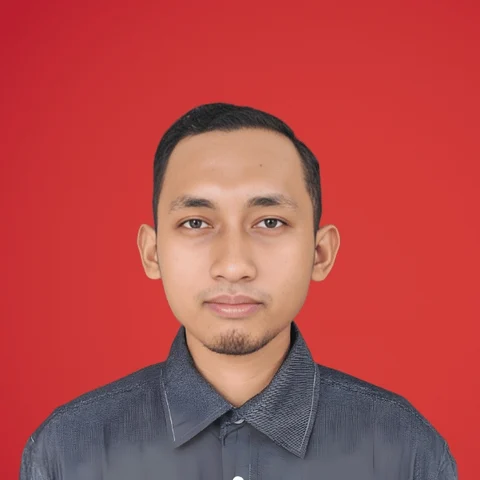
Ustadz Rizqi A.
Universitas Al-Azhar, Kairo
Mengajar bahasa Arab dari dasar dengan bahasa yang mudah dicerna, sehingga santri berani berbicara dan menulis. Bekal ilmunya dari Al-Azhar Kairo membuat bimbingannya berakar pada keilmuan yang dalam.
Bahasa Arab
SUIN
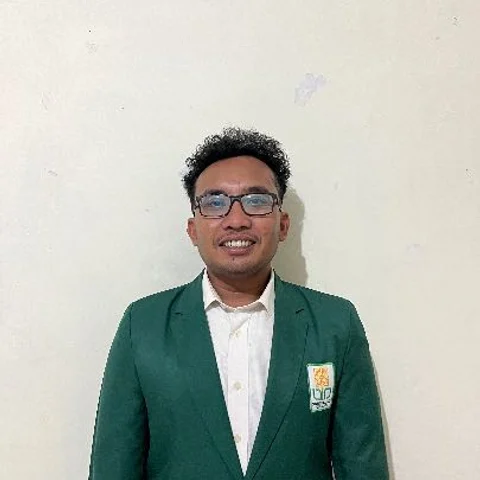
Ustadz Sandi R.
UIN Sunan KalijagaIlmu Hadits
Membimbing santri dari hafalan surat pendek sampai juz yang lebih panjang, dengan target yang masuk akal dan terukur. Adab dan pemahaman keislaman ditanam bersama pelajaran. Bekal akademiknya dari UIN menjadikan penjelasannya tertata dan mudah diikuti.
Tahfidz
Bahasa Arab
Mengaji Al-Quran
Tahsin Tajwid
Studi Islam
WUIN
Ustadzah Windari S.
UIN Sunan KalijagaSejarah Peradaban Islam
Sabar menuntun santri yang baru mengenal Al-Quran, menjaga suasana belajar tetap tenang dan menyemangati. Adab dan pemahaman keislaman ditanam bersama pelajaran. Latar pendidikannya di UIN memperkuat cara ia mendampingi santri belajar.
Mengaji Al-Quran
Tahfidz
Bahasa Arab
Tahsin Tajwid
Studi Islam
MAl-Azhar Kairo
Ustadz Munawar A.
Universitas Al-Azhar, KairoIlmu Al-Quran dan Tafsir
Membimbing bacaan santri agar makhraj dan tajwidnya tepat, lalu mengajak memahami makna lewat tafsir yang ringan dicerna. Bacaan rapi, pemahaman bertambah.
Mengaji Al-Quran
Bahasa Arab
Tahfidz
Tahsin Tajwid
Tafsir
These are a few of the teachers; thousands more serve families across Indonesia.
Material Preview
Real Arabic Language Materials for Students in Bogor
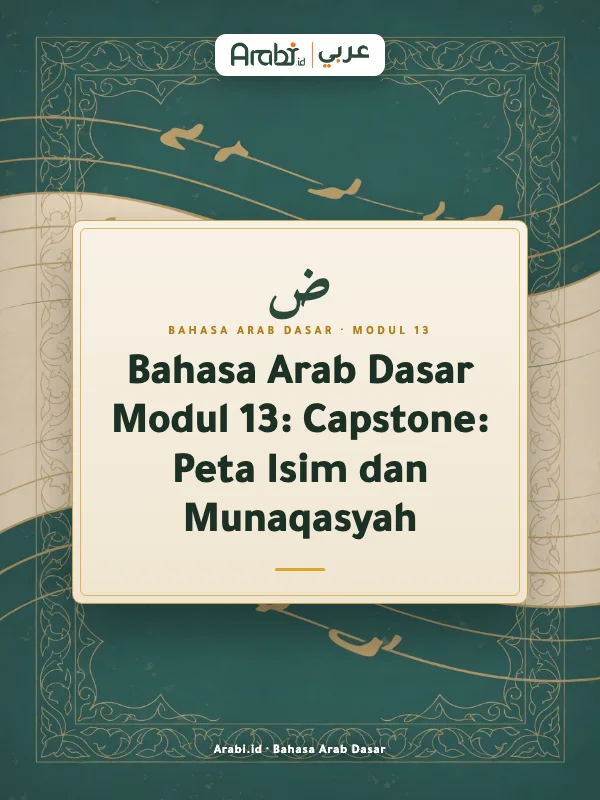
A preview of the official Arabi Method modules used in lessons, showing the depth of Arabi teaching materials.
Bahasa Arab Dasar Modul 13
Real material
Bahasa Arab Menengah Modul 13
Real material
Bahasa Arab Lanjutan Modul 12
Real material
Materials are matched to the level and ability of each student.
FAQ
Questions About the Arabic Course in Bogor
I do not know the Arabic letters at all, can I still join this course in Bogor?
You certainly can. You begin at level A1, the introduction to the 28 hijaiyah letters, how to join and write them from right to left, and where the sounds are formed (makhraj) so that pronunciation is accurate. The teacher trains you through musyafahah, that is, face to face until the correct sound is caught. Complete beginners, from children age 5 to older learners across Bogor, are welcomed and guided with patience.
What is the Arabi Method in learning Arabic?
The Arabi Method arranges the lessons in a sensible order, from sound to word, to sentence, then to a whole text, with the four skills (istima, kalam, qiraah, kitabah) kept in balance. Every meeting opens with muroja'ah (review) of earlier material before anything new, and pronunciation and i'rab are corrected on the spot by the teacher, so the rules hold and are put to use right away.
What are nahwu and shorof, and when do they begin to be taught?
Nahwu studies sentence structure and the position of words (i'rab), while shorof studies how the form of a word changes (tashrif) following standard patterns (wazan). Basic nahwu is first introduced at level B1 through the rules of the noun such as marifah, idhafah, and harf jar. Deeper shorof arrives at level B2 as you enter the world of fi'il, once letters, vocabulary, and basic conversation are mastered first.
I am already an adult in Bogor and busy with work, can I still learn from zero?
You can. Many of Arabi's adult learners begin from zero at ages 30 to 60 between work hours, and grow well within a matter of months. You start at level A1 with a patient teacher and the orderly Arabi Method. Meeting schedules are arranged together to suit your routine in Bogor, and classes are available private at home as well as online by video call.
Does mastering Arabic help in understanding the Quran directly?
Yes, this is the destination of the course. With enough vocabulary and firm nahwu and shorof rules, you can read Arabic text and then grasp the meaning of the verses in their own language. Allah sent down the Quran in Arabic so that people may understand it, as He said in QS Yusuf verse 2. Understanding the language makes your bond with the Quran feel more alive and closer.
How long until I can read unvocalized Arabic text without harakat?
The time differs from person to person, shaped by your starting point and how often you practice. Reading unvocalized text starts to be trained at level C1, once the world of fi'il and i'rab is firmly rooted in the earlier levels. With the sequential order of the levels and steady practice, many learners show heartening progress. Teachers share regular reports so your development stays measurable.
What is the course fee, and does it differ from city to city?
The fee is figured per 60-minute session and follows the level you are taking, from Rp55,100 at level A1 up to Rp110,826 at level C2, the same in Bogor as everywhere else with no hidden costs. The higher the level, the deeper the material. The initial consultation is free via WhatsApp at 628164896943 to settle the level that fits before you decide.
What is the difference between learning muhadatsah at Arabi and memorizing vocabulary from an app on your own?
An app helps you add vocabulary (mufradat), while real conversation needs a partner who corrects your pronunciation and sentence structure. At Arabi, an ustadz or ustadzah trains two-way muhadatsah, corrects makhraj and i'rab on the spot, then guides you to build sound sentences. The Arabi App rounds out your own practice between sessions with the teacher.
Can Arabic Language lessons in Bogor be held at home?
Yes. In Bogor, an Arabi ustadz or ustadzah can guide your child in learning Arabic Language at home, with a schedule that fits your family's busy life in areas such as Empang, Baranangsiang, Bantarjati, or Sindangbarang, and there is also an online learning option to keep it regular.
My child in Bogor is just starting to learn the hijaiyah letters, can they join?
Of course. Learning Arabic Language in Bogor begins from your child's point of ability, including those just learning the hijaiyah letters, then rises gradually following the Arabi Method so the foundation is strong and lasting for students in the city of Bogor.
Who teaches Arabic Language in Bogor with Arabi?
Students in Bogor are guided by ustadz and ustadzah who are competent in reading the Quran and Arabic, graduates of various campuses, trained in the Arabi Method, and teaching with the heart of a true teacher. They accompany your child in Bogor with patience and good adab in every meeting.
Does Arabi reach Empang, Bogor Selatan and Bogor Tengah in Bogor?
Yes. Arabi teachers serve families across Bogor, including Empang, Bogor Selatan, Bogor Tengah, Baranangsiang, Bogor Timur, and other areas. Sessions run privately at your home or online, so Arabic Language stays accessible wherever you are in Bogor.
Getting to Know Your City
Arabi Arabic Language in Bogor
Bogor is a cool city at the foot of Mount Salak that holds a warm and long-rooted Islamic tradition, from the Empang area in Bogor Selatan, known as an Arab quarter with the legacy of sayyids and scholars, to the homes of Muslim families in Bantarjati, Tegalgundil, Tajur, and Sindangbarang. In Bogor, jami mosques, majelis taklim, and Quran learning gardens are alive in almost every village, while the surrounding region is encircled by respected pesantren and madrasahs. This atmosphere is what makes many parents in Bogor want their children to grow up close to the Quran, fluent in recitation, and familiar with Arabic while keeping good adab.
Areas served:
Empang, Bogor SelatanBogor TengahBaranangsiang, Bogor TimurBantarjati, Bogor UtaraTegalgundilTajurSindangbarang, Bogor BaratTanah SarealBondonganSukasari
Islamic roots of the Empang area
The Empang area in Bogor Selatan has long been known as an Arab quarter with a respected tradition of Islamic scholarship. Your child learns Arabic Language with adab and depth that align with the spirit of this historic Bogor area.
Surrounded by pesantren and madrasah tradition
Bogor and its surroundings are encircled by pesantren and madrasahs that keep alive the spirit of seeking religious knowledge. The Arabi Method carries on that root with Arabic Language teaching that is structured and lasting for families in Bogor.
Lively majelis taklim and TPA
From Bantarjati to Sindangbarang, Quran learning gardens and majelis taklim run regularly in many Bogor villages. This culture of learning together helps children in Bogor grow up close to the Quran from an early age.
Child Readiness
Signs You Are Ready to Begin Arabic in Bogor
Before starting Arabic Language in Bogor, it is good to recognize your child's readiness according to age and ability. Arabi ustadz and ustadzah in Bogor help place students at the right level from the first meeting, from those just learning the hijaiyah letters to those ready to go further. Learning Arabic is open to every age and background. The signs below help you recognize the starting level that fits.
Ready to Start from A1 (Complete Beginner)
Not yet familiar with the hijaiyah letters
Wanting to read the Quran correctly
Children age 5 through older learners
Starting from zero with patient guidance
Ready to Move Up to Nahwu (B1)
Already fluent with letters and basic vocabulary
Able to hold simple daily conversations
Wanting to understand sentence structure
Ready to meet basic i'rab
Ready to Head Toward Turats Texts (C1)
Mastering basic nahwu and shorof
Used to reading vocalized text
Wanting to read unvocalized books
Wanting to understand the verses directly
Four Language Skills
The Four Maharah That Build Your Arabic in Bogor
The Arabi Method for Arabic Language in Bogor guides students step by step, from the basics to lasting ability, with the support of an ustadz or ustadzah who adapts to the needs of families in various Bogor areas such as Baranangsiang, Tajur, and Tegalgundil. The Arabi Method keeps the four skills in balance, so rules are put to use straight away and settle in while you read and speak.
01
Istima (Listening)
Tuning the ear to the sounds of the letters, the harakat (vowel marks), and classical Arabic (fushha) sentences with accuracy, the groundwork of sound pronunciation.
02
Kalam (Speaking)
Back-and-forth conversation (muhadatsah) with your teacher, from greetings and introductions to fuller exchanges, so the tongue grows at ease.
03
Qiraah (Reading)
Reading vocalized text, then rising to text without vowel marks, while grasping the role of each word through i'rab (case analysis).
04
Kitabah (Writing)
Writing joined letters from right to left, forming sentences, up to simple composition (insya').
Why Arabic
Allah Sent Down the Quran in Arabic So That It May Be Understood
Indeed, We sent it down as an Arabic Quran, so that you may understand.
QS Yusuf: 2
Mastering Arabic opens the door to understanding Allah's message in its original language, so your relationship with the Quran feels more alive and close.
Take Your First Step in Arabic with Arabi in Bogor
Tell us how far you know the letters, vocabulary, or rules, and the Arabi team will set the right starting level for you, from A1 to C2, for children through older learners across Bogor. The initial consultation is free, private at home as well as online. Begin the Arabic Language journey for your child in Bogor with Arabi today, and accompany their steps toward reading the Quran ever more fluently in the city of Bogor.