In Tangerang, learn khat from the very tip of the qalam to a piece you would be proud to frame. Naskhi comes first as the foundation, then Riq'ah and Thuluth, with every proportion measured by the nuqthah dot. Open to children, teens, adults, and seniors, through private lessons at home across Cipondoh, Karawaci, and Ciledug, or online with calligraphers trained in the Arabi Method.
3 Khat StylesNaskhi, Riq'ah, and Thuluth in sequence
3 Khat StylesNaskhi, Riq'ah, and Thuluth in sequence
The Nuqthah RuleEach letter measured by the dot
Metode ArabiTrained calligraphers
Every AgeFrom children aged 5 to seniors
2 WaysAt your Tangerang home or online
3 Khat StylesNaskhi, Riq'ah, and Thuluth in sequence
The Nuqthah RuleEach letter measured by the dot
Metode ArabiTrained calligraphers
Every AgeFrom children aged 5 to seniors
2 WaysAt your Tangerang home or online
Quick Answer
What is the Arabic calligraphy (khat) course at Arabi in Tangerang?
Amid the busy life typical of Tangerang, Arabi uses a gradual and measured method, so your child truly understands and becomes fluent in Arabic Calligraphy before moving up to the next stage. Arabi's Arabic calligraphy (khat) course in Tangerang teaches you to write Arabic letters with beauty and correct rules.
Key points
Strokes are sized by the nuqthah dot, so each letter keeps its true proportion.
Naskhi is settled first as the parent style, before you climb to Riq'ah and Thuluth.
Each practice sheet is corrected in person, from line thickness to the space between letters.
Open to Tangerang families with children from 5, students, working parents, and seniors.
Quick facts
Khat styles
Naskhi, Riq'ah, Thuluth
Unit of measure
The nuqthah dot from the qalam tip
How you learn
Private, at home and online
Age
5 years to seniors
Child Readiness
Signs You Are Ready to Begin Khat
Before starting Arabic Calligraphy in Tangerang, many parents want to know the signs their child is ready. This simple list helps you recognize your child's readiness according to age and ability. Arabic calligraphy welcomes beginners and the already trained alike. The points below sketch how ready your hand and eye are, and the calligrapher sets your level through an opening consultation that fits your Tangerang schedule.
A Child Ready to Begin
Can already hold a pen steadily
Recognizes some of the hijaiyah letter shapes
Enjoys tracing lines and shapes with care
Teens, Adults, and Seniors
Wants to start from scratch or firm up a style already known
Willing to repeat stroke practice at home
Has a regular slot for one session each week
What Arabi Prepares
A free level-placement consultation
Rule sheets, stroke examples, and tracing practice
A qalam and tool guidance suited to your stage
Who It Is For
Khat Welcomes the Patient and the Diligent, at Any Age
Arabic calligraphy asks for precision, patience, and steady practice under correct rules. That is why Arabi opens khat classes for a range of needs and ages across Tangerang, with guidance shaped to each learner and to the family's schedule.
Children and Teens
Growing precision and patience early, while a love for the letters of the Quran takes root through strokes they enjoy making.
Students Who Love Writing as Art
Getting ready for the khattil Quran competition (MKQ) or bringing correct rules to personal notes and works of their own.
Working Parents and Professionals
For busy Tangerang parents, a calming pursuit after long commutes, and framed pieces for the home or a heartfelt gift.
Seniors and Mosque Volunteers
Filling time with something meaningful that builds calm, while becoming skilled at writing mosque wall ornament and event decoration for the neighborhood.
Getting to Know Your City
Arabi Arabic Calligraphy in Tangerang
Tangerang pulses as a busy satellite city of the capital, where Muslim families work hard yet still keep their children close to the Quran. Islamic tradition in Tangerang grows from the heritage of Banten and the suburban Betawi community, visible in the majelis taklim that thrive across the kampungs and historic mosques like Masjid Agung Al-Ittihad in Cipondoh and Masjid Pintu Seribu in the Periuk area. Amid the fast pace of Tangerang, many parents want their children to read the Quran with correct tajwid and to know the Arabic language from an early age, with a schedule that fits the rhythm of a busy family. Arabi accompanies Tangerang families in building their child's Islamic foundation through the structured Metode Arabi, guided by competent ustadz and ustadzah.
CipondohKarawaciCiledugCikokolPinangLaranganBatuceperPeriukNeglasariKarang Tengah
In Step With Tangerang's Quran Learning Tradition
Tangerang has deep roots in the culture of learning to recite the Quran through majelis taklim and TPA in many kampungs, from Cipondoh to Ciledug. Arabi carries that spirit forward with an orderly method, so your child reads the Quran with correct tajwid and memorization that stays.
A Schedule That Follows the Tangerang Family Rhythm
Many parents in Tangerang work long hours with long commutes to Jakarta. Learning sessions at Arabi are arranged short and regular, with the choice of an ustadz or ustadzah coming to your home or learning online, so your child keeps progressing through a busy day.
Guided by Competent Ustadz and Ustadzah
For families in Karawaci, Cikokol, and Larangan, your child learns alongside Arabi teachers who graduated from various campuses and are trained in the Metode Arabi. They teach with heart, instilling adab together with knowledge from an early age.
Anatomy of the Material
What You Hold in Every Khat Session
The material is arranged neatly, from rule sheets to sample pieces to copy, so your practice always has a correct reference.
01
The Nuqthah Rule Sheet
Shows the height of the alif, the width of the ba, and the measure of every letter in a number of rhombus dots, as a proven yardstick.
02
Graded Stroke Examples
Single letters, joins, then words and sentences, arranged from the easy to those that demand greater precision.
03
Tracing Practice Sheets
Faint patterns to trace over, training your hand to follow the path of the rule before you write on your own.
04
Reference Gallery of Works
Sample compositions of the basmalah, the asmaul husna, and short phrases, as inspiration and a guide for your first piece.
The material is prepared in layers according to your level and given step by step as the guidance unfolds.
The Path of Achievement
Khat Opens the Way, from Hobby to the MKQ Competition
For those who wish to reach further, Arabic calligraphy holds a real path of achievement through the Musabaqah Khattil Quran. This achievement grows alongside practice, and Arabi guides it honestly according to each student's ability.
The Naskah (Manuscript) Branch
Writing verses in the required and chosen styles neatly and correctly within a set time, sharpening the speed and accuracy of the strokes.
The Decoration Branch (Mushaf Ornament)
Weaving writing together with ornament and color, calling for a mature handling of space and aesthetic balance.
The Contemporary Branch
Exploring khat styles in free composition that still rests on the correct rules of the letters.
Arabi introduces the demands of each branch and guides its rules strictly for students who are interested.
The Arabi Khat Method
Carrying Forward the Way of the Master Calligraphers, Set Out for Beginners
Amid the busy life typical of Tangerang, Arabi uses a gradual and measured method, so your child truly understands and becomes fluent in Arabic Calligraphy before moving up to the next stage. Khat has always travelled from teacher to student through copied examples and hands-on correction. Arabi keeps this way alive and lays it out as clear, ordered steps for Tangerang learners.
Copying the teacher's example
Manqul
You write over or beside the rule example, training your eye and hand to know the correct shape of each letter before you write freely.
Learning face to face
Talaqqi
The calligrapher forms the strokes in front of you and shows the hand movements that words alone cannot carry, from the tilt of the qalam to the pressure behind each stroke.
Assessing every sheet
Stroke Correction
Each practice is marked where it needs work, from line thickness, to the level of the rows, to the gaps between letters, so proportion keeps sharpening.
The Arabi Method arrangement
Gradual Levels
One style is settled before the next begins, so the base of your strokes stays firm and calm as the material widens.
For generations, calligraphers (khattat) learned by copying their teacher's work one letter at a time, then handing over their practice for correction until the strokes held true to the rules. Arabi keeps this tradition and arranges it into tidy levels, so a Tangerang beginner who has never held a qalam still has a clear road toward a finished piece.
Real Arabi Teachers
Ustadz Who Teach Arabic Calligraphy in Tangerang
A glimpse of the real Arabi teachers who guide Arabic Calligraphy in Tangerang, chosen from leading campuses and trained in the Arabi method.
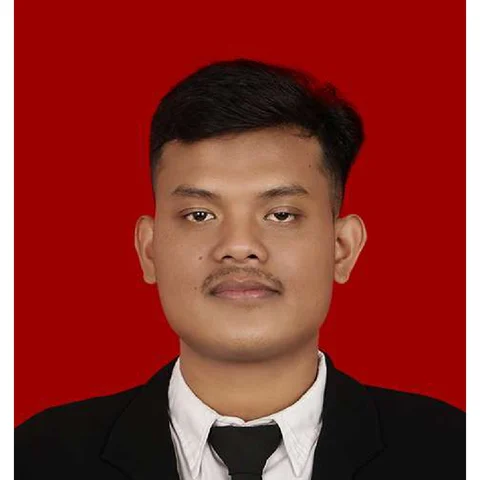
SUIN
Ustadz Sanu T.
Universitas Islam Negeri Sunan Kalijaga Yogyakarta
Mengajar bahasa Arab dari dasar dengan bahasa yang mudah dicerna, sehingga santri berani berbicara dan menulis. Akhlak yang baik ditumbuhkan seiring bertambahnya ilmu. Bekal akademiknya dari UIN menjadikan penjelasannya tertata dan mudah diikuti.
Bahasa Arab
Mengaji Al-Quran
Akidah Akhlak
Studi Islam
HUIN
Ustadzah Hana '.
Universitas Islam Negeri Sunan Ampel Surabaya
Mengajar mengaji dengan runtut, dari mengenal harakat sampai membaca ayat dengan tajwid yang benar. Pengalaman yang dibentuk di UIN membuatnya sabar menghadapi tiap santri.
Mengaji Al-Quran
Bahasa Arab
Tahsin Tajwid
Studi Islam
FPesantren
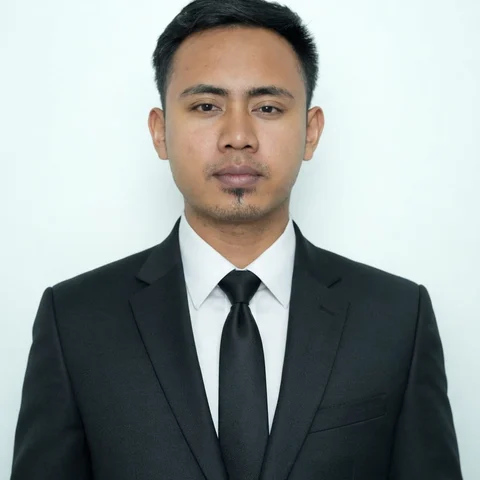
Ustadz Fakhri K.
Pondok Pesantren La Tansa 2
Mengajak santri akrab dengan bahasa Arab lewat percakapan dan kosakata sehari-hari, lalu menapak ke kaidah. Suasana belajarnya hangat dan menyenangkan.
Bahasa Arab
Mengaji Al-Quran
Tahsin Tajwid
Studi Islam
RDarussalam Gontor
Ustadz Royyan F.
Universitas Darussalam GontorEkonomi Islam
Menata pemahaman tata bahasa Arab santri agar rapi, dari mengenal isim, fi’il, dan harf sampai menyusun kalimat. Ia juga menata hafalan supaya tumbuh bersama bacaan. Terbiasa berbahasa Arab sejak di Gontor, ia membuat belajar terasa dekat dan hidup.
Shorof
Tahfidz
Bahasa Arab
Nahwu
Tahsin Tajwid
These are a few of the teachers; thousands more serve families across Indonesia.
FAQ
Questions About the Arabic Calligraphy Course in Tangerang
Can I learn Arabic calligraphy from scratch without being able to draw?
Yes. Arabic calligraphy rests on precision and steady practice with correct rules, and anyone can train this. You begin by holding the qalam, working lines and dots, then sizing letters with the nuqthah unit. Arabi's calligraphers in Tangerang guide you step by step, so even a beginner who has never held a qalam can reach a piece worthy of framing.
What khat styles are taught at Arabi?
Arabi teaches three core styles in sequence. Naskhi comes first because its forms are clear, easy to read, and serve as the parent of the other styles. Once Naskhi is steady, you meet the compact Riq'ah for quick writing, then the majestic Thuluth with its broad curves for ornament and wall pieces. Each style carries its own rule of measure, trained gradually.
What is the nuqthah rule in Arabic calligraphy?
The nuqthah is a rhombus-shaped dot printed from the tip of the qalam, used to size each letter. The height of the alif, the width of the ba, and the curve of a letter are each set by a certain number of dots. With this measure, your writing turns balanced and true to the same rules of khat the masters have followed for generations.
What is the minimum age for a child to join the Arabic calligraphy course in Tangerang?
A child who can already hold a pen steadily and knows the hijaiyah letters is usually ready to begin, generally around 5 years and above. For children, the guidance follows the steadiness of their hand and their span of focus, starting from simple lines and dots. A free consultation via WhatsApp 628164896943 helps us gauge your child's readiness.
Can the calligraphy course be done online for Tangerang families?
Yes. Arabi runs khat classes at your Tangerang home or online through the screen, which many busy families here prefer. In an online class the calligrapher draws the example live and you send photos of your practice to be corrected on the spot. Online learning is also supported through the Arabi App, and registration is done through daftar.arabi.id.
Does Arabi prepare students for calligraphy competitions such as the MKQ?
Yes, for students who are keen. The Musabaqah Khattil Quran (MKQ) judges the beauty and rules of the writing across the naskah, decoration, and contemporary branches. Arabi's calligraphers guide the rules strictly and introduce the demands of each branch. This preparation grows alongside practice, and we guide it honestly according to each student's ability.
How long does it take to be able to create a calligraphy piece?
The time differs from person to person because khat is measured by the quality of strokes that keep improving. What counts is diligent practice and the steadiness of each milestone, from controlled lines, to Naskhi letters, to joins, to composition. With regular practice and periodic correction, many students in Tangerang have produced a first basmalah piece worthy of framing within a few levels.
Can Arabic Calligraphy lessons in Tangerang have an ustadz or ustadzah come to my home?
Yes. For families in Tangerang such as in the Cipondoh, Karawaci, and Ciledug areas, Arabic Calligraphy sessions can be held at home so your child learns in a comfortable environment, with a schedule that adjusts to the busy life of parents in Tangerang.
What age is suitable to start Arabic Calligraphy in Tangerang?
Arabi's Arabic Calligraphy program in Tangerang can be followed by children from an early age up to more advanced levels. The material is adjusted to the child's stage of ability, so both a child who is just starting and one who wants to go deeper can comfortably follow it in Tangerang.
What makes the Metode Arabi for Arabic Calligraphy in Tangerang feel different?
In Tangerang, Arabi teaches Arabic Calligraphy with an orderly method, guided by competent ustadz and ustadzah who teach with heart. Your child is guided step by step to read correctly, understand the meaning, and grow a love for religious knowledge in Tangerang.
Does Arabi reach Cipondoh and Karawaci in Tangerang?
Yes. Arabi teachers serve families across Tangerang, including Cipondoh, Karawaci, Ciledug, and other areas. Sessions run privately at your home or online, so Arabic Calligraphy stays accessible wherever you are in Tangerang.
Comparison
Learning Khat with Arabi Compared to Other Ways
Muslim families in Tangerang have many options for how their child learns religion, so it helps to look honestly and openly at the differences between each approach to Arabic Calligraphy. There are many ways to learn Arabic calligraphy in Tangerang, and each has its place. Here is an honest picture, so you can choose with open eyes while still respecting every option.
Stroke correction
Arabi Private Khat
Every stroke is corrected in person by a calligrapher
Self-Study from VideoNo one fixes the strokes, and errors in measure quietly settle in
School ExtracurricularOne teacher for many children, so correction per student is thin
Rule of measure
Arabi Private Khat
Sized by the nuqthah dot unit from the very start
Self-Study from VideoOften guesswork with no standard yardstick
School ExtracurricularA basic introduction, the rule of measure rarely spelled out
Level arrangement
Arabi Private Khat
Levels matched to each student's real progress
Self-Study from VideoRests on personal discipline to pick the order
School ExtracurricularLevels hard to arrange within limited class time
Place and schedule
Arabi Private Khat
Shaped around you, at your Tangerang home or online
Self-Study from VideoFlexible, yet with no guide beside you
School ExtracurricularTied to the school's fixed schedule and place
Pricing
Arabic Calligraphy Cost in Tangerang
This fee is the same for every Arabi teacher serving Tangerang and its surroundings, including Cipondoh, Karawaci, Ciledug. You are free to learn privately at home or online.
A1Foundational (introduction)Rp 55.100 / per session
A2Foundational (advanced)Rp 63.365 / per session
B1IntermediateRp 72.870 / per session
B2Intermediate (advanced)Rp 83.800 / per session
C1AdvancedRp 96.370 / per session
C2ProficientRp 110.826 / per session
Take a package, and the larger it is the more you save per session:
4 sessionsRp 73.000 per sessionRp 292.000
8 sessionsRp 70.000 per sessionRp 560.000
12 sessionsRp 68.000 per sessionRp 816.000
24 sessionsRp 65.500 per sessionRp 1.572.000
A single session: Rp 72.870 in person, Rp 55.100 online.
In the name of Allah, the Most Gracious, the Most Merciful.
QS Al-Fatihah: 1
The basmalah is the phrase most often written in Arabic calligraphy, opening a piece and a practice in composition. Within it gather varied letter shapes, curves, joins, and spaces that call for balance, which is why it is often chosen as a student's first framed work.
The beauty of khat begins with a single correct stroke. Tell us how far you know the letters and the qalam, and Arabi's calligrapher will help gauge which level you should start from. For children, teens, adults, and seniors. The opening consultation is free via WhatsApp, learning is available at home or online, and you may also register through daftar.arabi.id. Take the first step in learning Arabic Calligraphy for your child in Tangerang today, together with the Metode Arabi and teachers who teach with heart.