In Sorong you can learn khat from the way you first hold the qalam all the way to a piece ready for the wall. Naskhi comes first as your base, then Riq'ah and Thuluth, with every letter sized by the nuqthah dot. Children, teens, adults, and seniors are all welcome, through private lessons at home or online with calligraphers trained in the Arabi Method.
What is the Arabic calligraphy (khat) course at Arabi in Sorong?
The Arabi Method for Arabic Calligraphy in Sorong guides students step by step, from learning the basics to skills that truly stick, with an ustadz or ustadzah who adapts to the needs of families in the port city of Sorong. Arabi's Arabic calligraphy (khat) course in Sorong teaches you to write Arabic letters beautifully and by correct rule.
Key points
Naskhi is settled first as the parent style before you reach Riq'ah and Thuluth.
Open to children from age 5, students, working adults, and seniors.
Quick facts
Khat styles
Naskhi, Riq'ah, Thuluth
Age
5 years to seniors
Same in every city
Arabic Calligraphy levels and method
A short outline of the curriculum, identical in every city. Read the full version on the main Arabic Calligraphy page.
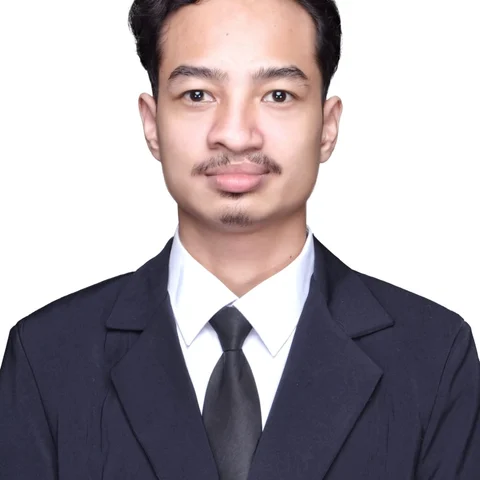
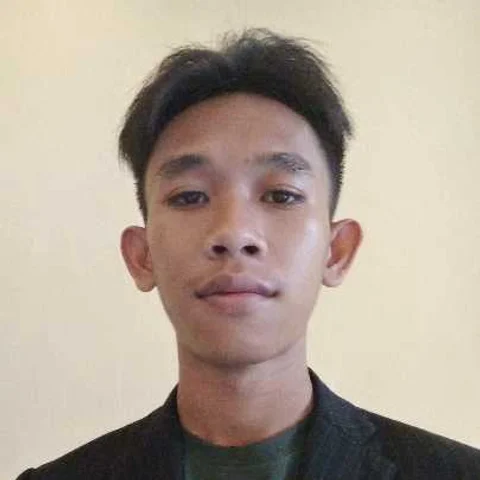
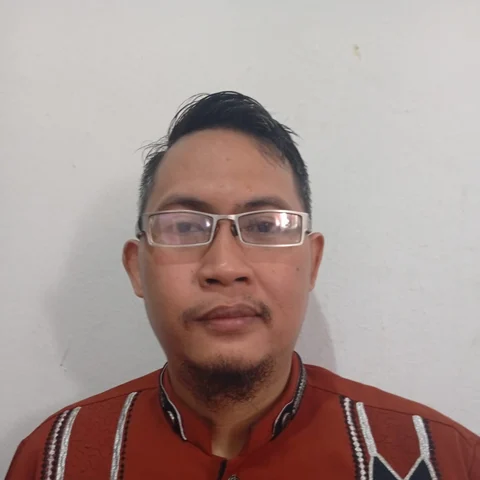
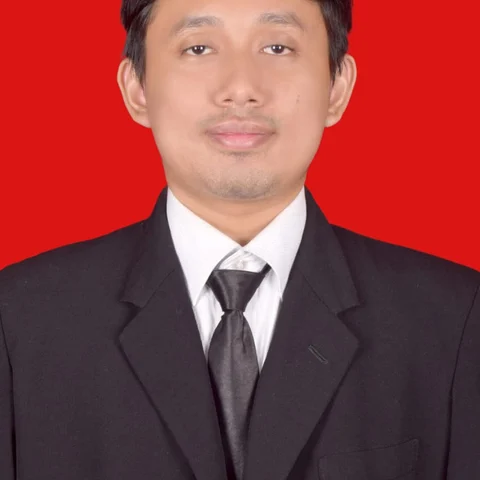
Meet a few of the Arabic Calligraphy teachers for students in Sorong: campus graduates who teach with the Arabi method.
R
Ustadz Raenza P.
Universitas Darussalam Gontor
Teaches Arabic from the basics in easy-to-grasp language, so students dare to speak and write. The habit of Arabic from Gontor makes his examples lively and easy to follow.
Bahasa Arab
Studi Islam
F
Ustadz Fakhri K.
Pondok Pesantren La Tansa 2
Brings students close to Arabic through everyday conversation and vocabulary, then steps into grammar. His lessons feel warm and enjoyable.
Bahasa Arab
Mengaji Al-Quran
Tahsin Tajwid
Studi Islam
A
Ustadz Asep K.
Universitas Al-Azhar, KairoSyariah wal Qanun
Corrects students’ reading one by one, so each session feels more fluent and confident. His Arabic helps students understand the meaning of what they learn. His grounding from Al-Azhar in Cairo gives his guidance deep scholarly roots.
Mengaji Al-Quran
Bahasa Arab
Studi Islam
N
Ustadz Nazhif R.
Universitas Islam Negeri Maulana Malik Ibrahim Malang
Arranges students’ memorisation with tidy sabaq, sabqi, and manzil, so memorised verses stay guarded and are not easily forgotten. His UIN background strengthens the way he supports students’ learning.
Tahfidz
Bahasa Arab
Mengaji Al-Quran
Tahsin Tajwid
Studi Islam
L
Ustadzah Lail N.
Universitas Islam Negeri Sunan Ampel
Corrects students’ reading one by one, so each session feels more fluent and confident. Her Arabic helps students understand the meaning of what they learn. Her academic grounding from UIN makes her explanations structured and easy to follow.
Mengaji Al-Quran
Bahasa Arab
Studi Islam
M
Ustadz Marshall A.
Universitas Islam Negeri Maulana Malik Ibrahim MalangBahasa dan Sastra Arab
Leads students to understand Arabic sentence structure, so reading classical books feels lighter and meaningful. A sensitivity to the beauty of Arabic is sharpened too. His UIN background strengthens the way he supports students’ learning.
Bahasa Arab
Shorof
Nahwu
Mengaji Al-Quran
Balaghah
This is only a small part of the network; thousands of other teachers work with learners in many cities.
The Path of Achievement
Khat Opens a Road, from Pastime to the MKQ Stage
For those who wish to reach further, Arabic calligraphy holds a real path of achievement through the Musabaqah Khattil Quran. This grows step by step with practice, and Arabi guides it honestly by each student's own ability.
The Naskah (Manuscript) Branch
Writing verses in the required and chosen styles neatly and correctly within a set time, training both the speed and the accuracy of the strokes.
The Decoration Branch (Mushaf Ornament)
Weaving writing together with ornament and color, which calls for mature handling of space and aesthetic balance.
The Contemporary Branch
Exploring khat styles in free composition that still rests on the correct rules of the letters.
Arabi introduces what each branch demands and guides its rules closely for students who are drawn to compete.
The First Piece
The Phrase a Calligrapher Often Writes First
بِسْمِ اللَّهِ الرَّحْمَٰنِ الرَّحِيمِ
Bismillahir-rahmanir-rahim
In the name of Allah, the Most Gracious, the Most Merciful.
QS Al-Fatihah: 1
The basmalah is the phrase most often written in Arabic calligraphy, opening a piece and a practice in composition. Within it gather varied letter shapes, curves, joins, and spaces that call for balance, which is why it is often chosen as a student's first framed work.
Comparison
Learning Khat with Arabi Next to Other Ways
Many Muslim parents in Sorong weigh different ways for their children to learn Quran recitation and Arabic. Here is an honest picture of how structured Arabic Calligraphy with a clear method from Arabi helps families in Sorong compared with other options. There are many roads to Arabic calligraphy, and each has its worth. Here is an honest look, so you can choose clear-eyed while still respecting every option.
Stroke correction
Arabi Private Khat
A calligrapher corrects every stroke directly
Self-Study from VideoNo one fixes the strokes, so errors in measure quietly settle in
School ExtracurricularOne teacher for many children, so per-student correction is thin
Rule of measure
Arabi Private Khat
Sized by the nuqthah dot unit from day one
Self-Study from VideoOften guesswork with no fixed yardstick
School ExtracurricularA basic touch, with the rule of measure rarely spelled out
This fee is the same for every Arabi teacher serving Sorong and its surroundings, including Remu, Klademak, Klaurung. You are free to learn privately at home or online.
Rp 86.370 / per session a session of 60 minutes, one learner with one tutorteacher comes to you in Sorong
Sessions come in 60, 90, and 120 minutes, each with its own per-session fee:
60 minRp 86.370
90 minRp 108.231
120 minRp 137.379
Prefer to learn online? It costs the same here, Rp 86.370 per session, and that figure holds in every city.
You take a monthly package at the length you choose in Sorong; the per-session figure above starts at 4 sessions a month. Each session costs less as the package grows:
4 sessionsper monthRp 86.370 per sessionRp 345.480
8 sessionsper monthRp 84.913 per sessionRp 679.301
12 sessionsper monthRp 83.455 per sessionRp 1.001.462
24 sessionsper monthRp 79.083 per sessionRp 1.897.992
A shared session in Sorong is counted 25% lower, which comes to Rp 64.778 per session per learner.
Registration is Rp 95.000, paid once at the very start. The 8-session package in Sorong therefore comes to Rp 774.301 on your first payment.
Sorong is the largest city in Southwest Papua Province, the main gateway to Raja Ampat and a busy port at the western tip of Papua Island. In this port city live Muslim families who have come from many regions, from the dense areas of Remu and Klademak in the center to Tanjung Kasuari and Malaimsimsa along the coast. Amid the bustle of trade and shipping, many parents in Sorong want their children to grow up close to the Quran, recite fluently, and learn Arabic with good adab. Islamic life in Sorong thrives through mosques, TPA, madrasah, and majelis taklim spread across the city's neighborhoods, places where children learn to read the Quran from an early age. This atmosphere makes learning Arabic Calligraphy in Sorong feel woven into family life, guided by ustadz and ustadzah who understand the rhythm of this port city.
01
Learning that fits the rhythm of a port city
Sorong is a busy port city full of trade and shipping activity. Arabic Calligraphy with Arabi is arranged so your child can keep learning regularly with an ustadz or ustadzah, at home or online, without the burden of distance between the areas of Sorong.
02
Keeping religious roots strong at the gateway to Southwest Papua
Many Muslim families in Sorong have come from various regions and want their children to stay close to the Quran far from home. Arabic Calligraphy in Sorong plants correct tajwid, adab, and a love for religious knowledge from an early age.
03
Teachers close to daily life in Sorong
Arabi brings ustadz and ustadzah trained in the Arabi Method who are used to guiding children in a city like Sorong, patient in reading each student's ability and explaining in language that is easy to understand.
My child, once so restless, now traces lines and dots with real care. The calligrapher draws in front of him, so he can see exactly how the hand should move.
I began from zero in my thirties. Learning Naskhi by the nuqthah rule tidied my writing, and I have already framed my first basmalah.
Through the naskah branch I came to grasp the required and chosen styles. Correction on every sheet made my strokes more exact heading into the MKQ.
Anatomy of the Material
What You Hold in Every Khat Session
The Arabi Method for Arabic Calligraphy in Sorong guides students step by step, from learning the basics to skills that truly stick, with an ustadz or ustadzah who adapts to the needs of families in the port city of Sorong. The material is arranged neatly, from rule sheets to sample pieces to copy, so your practice always has a correct reference.
01
The Nuqthah Rule Sheet
Shows the height of the alif, the width of the ba, and the measure of every letter in a number of rhombus dots, as a proven yardstick.
02
Tracing Practice Sheets
Faint patterns to trace over, training your hand to follow the path of the rule before you write on your own.
The material is prepared in layers according to your level and given step by step as the guidance unfolds.
FAQ
Questions About the Arabic Calligraphy Course in Sorong
Arabi teaches three core styles in order. Naskhi comes first because its forms are clear, easy to read, and act as the parent of the others. Once Naskhi is steady, you meet the compact Riq'ah for quick writing, then the majestic Thuluth with its broad curves for ornament and wall pieces. Each style carries its own rule of measure, trained gradually.
What is the nuqthah rule in Arabic calligraphy?
The nuqthah is a rhombus-shaped dot stamped from the tip of the qalam, used as the unit to size each letter. The height of the alif, the width of the ba, and the sweep of a curve are all counted in a number of dots. With this measure, your writing turns balanced and true to the same rules of khat the masters have carried for generations.
Can Arabic Calligraphy in Sorong be learned at home?
Yes. Arabi offers Arabic Calligraphy with an ustadz or ustadzah who can come to your home in various areas of Sorong such as Remu, Klademak, Klaurung, or Tanjung Kasuari, and there is also an online learning option to keep learning regular even though distances between areas in Sorong are quite far apart.
What age is suitable to begin Arabic Calligraphy in Sorong?
Children in Sorong can begin Arabic Calligraphy from an early age, and the levels are adjusted to each student's ability. Arabi will first help you recognize your child's readiness so learning feels comfortable and gradual amid the daily life of Muslim families in Sorong.
How does Arabi maintain the quality of Arabic Calligraphy teachers in Sorong?
Arabi's Arabic Calligraphy teachers in Sorong are ustadz and ustadzah trained in the Arabi Method, graduates of various campuses, with expertise in Quran recitation and Arabic and the heart of a teacher who teaches with sincerity, so your child in Sorong is guided with patience and good adab.
Is Arabic Calligraphy available around Remu, Sorong Kota and Klademak, Sorong Manoi?
Students in Remu, Sorong Kota, Klademak, Sorong Manoi, Klaurung, Sorong Utara and nearby districts of Sorong can learn at home with a visiting teacher, or join online.